Where Carpentersville roof leaks actually start
Water on a pitched asphalt roof rarely drips straight down from the hole. It runs along the deck or a rafter and appears at a seam, a nail, or the low point of the insulation. In Carpentersville the first indoor clue is often a bedroom or a hallway that does not sit under the failed detail. Tracing that path is the repair. Painting the ceiling is not.
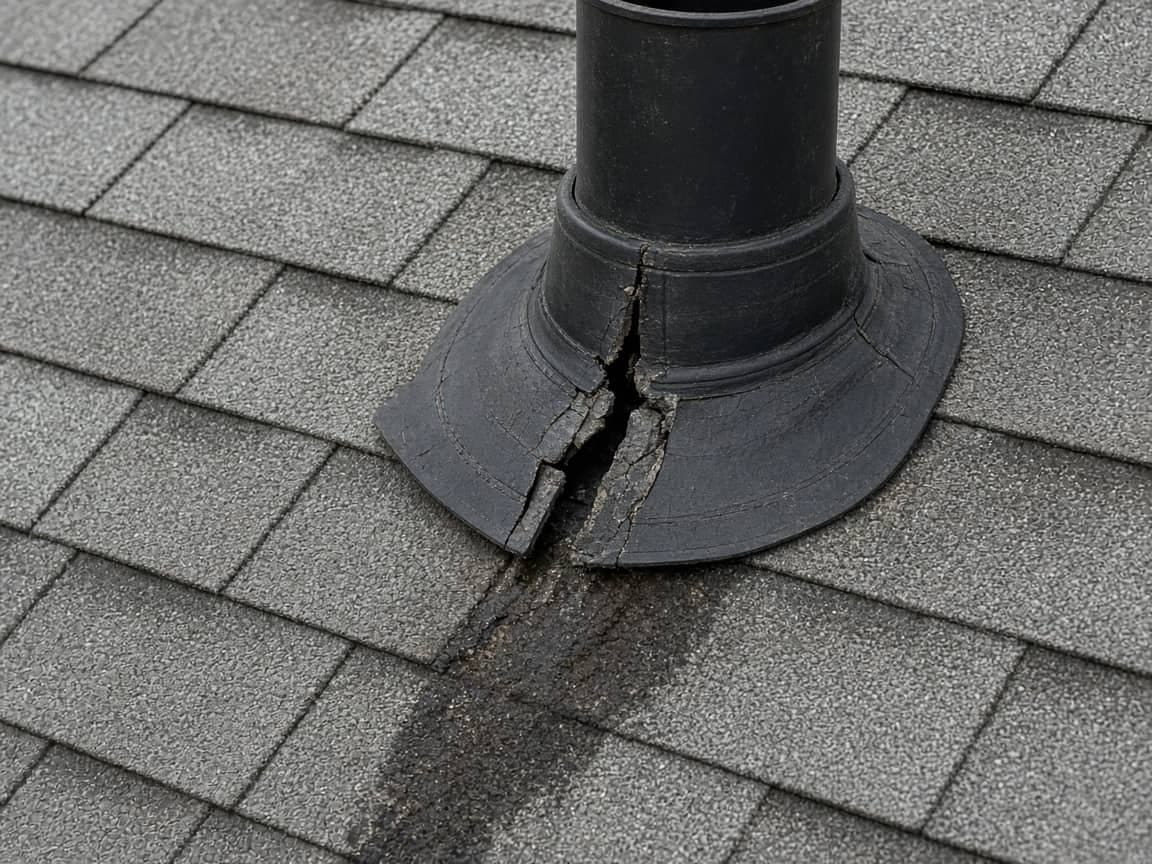
- Pipe boots. Sun hardens the rubber collar on a plumbing vent until it splits. Water follows the pipe. One boot on a flexible field is a standard repair.
- Chimney flashing. Counterflashing pulls out of weathered mortar, or a bead of roof cement cracks after a few freeze-thaw winters. Another smear of cement is a delay.
- Step flashing at sidewalls, dormers, and lower roofs that meet a taller wall. Short or face-nailed pieces let rain run behind the metal.
- Valleys packed with granules and debris. In a hard rain, water climbs the cut edge and wets the deck on both sides.
- Ice at the eaves after snow and a thaw. Meltwater backs up under the first courses. The upper field can still look sound. The ice dam section of the repair guide covers that pattern.
- Wind-lifted tabs and nail pops on west and southwest slopes. The opening is small until the next wind-driven rain.
Overflowing gutters can imitate a roof leak. Ice or leaves at the eave send water under the first courses or down the fascia, and the stain shows at the top of an exterior wall. A leak repair estimate should separate a drainage problem from an open roof detail so the work matches the cause.
What are the warning signs of a roof leak in a Carpentersville house?
A tan ring or bubbling paint during rain, a musty attic, darkened sheathing, daylight around a pipe or chimney, and granules collecting in a downspout are the signs you can check without climbing. An active drip needs a bucket and a prompt estimate. A stain that fades after the weather clears still had a path inside.
Check these without a ladder:
- A tan ring, soft drywall, or paint that bubbles during a long rain and looks quieter after it stops
- From the attic hatch, staying on the joists: darkened sheathing, clumped insulation, or a bright gap around a pipe or chimney
- A musty smell that gets stronger after wet weather
- Granules piled in a gutter or at a downspout outlet, beyond the light shed of a newer roof
- A drip you can hear in one room only when the wind drives rain at a particular wall
Note the room, the nearest outside wall, and whether it started after wind, after ice, or during an ordinary rain. Photos of the ceiling and of the slopes from the yard are enough. Stay off a wet or steep roof. If water is coming in now, catch it, move what you can, and request a free leak repair estimate.
What does a roof leak repair visit include?
The visit starts with what you reported: which room, which side of the house, and whether the water is active. From the ground and, when it is safe, the attic, the look traces the stain back to a boot, flashing, valley, or eave. You get a scope for that opening — repair the detail, repair more than one detail, or replace — with no charge and no obligation to continue.
A useful request includes:
- Your name, email, and ZIP
- Which room is wet, and which side of the house is closest
- Whether water is active, or the stain appears and then dries
- Whether it followed wind, ice, or a normal rain
- The approximate age of the roof, if you know it
On site, the look follows the symptom back to a source. That usually means the shingles around the stain's likely path, the penetrations, the flashing, the valleys, and the eaves. Attic access, when it is safe, shows whether the deck is stained in a line or wet in one spot. You should leave with a scope: repair one detail, repair a few details, or replace. There is no charge for the estimate and no obligation to go further.
Scheduling depends on weather and on whether water is active. Ask about timing when you send the form. An active drip is described as such. A dried stain can wait for a clear day without pretending the opening closed.
When does a leak in Carpentersville mean replacement instead of another patch?
Replacement is the clearer scope when leaks show up in several places, the same spot was already patched more than once, shingles curl or go bald across a slope, or the tabs shatter when flashing is lifted. One opening on a flexible field is usually a repair. The estimate should say which of those it found and why.
A leak repair is the usual scope
- One source, such as a split boot or a section of chimney flashing
- A valley or vent that failed while the field still has granules
- Ice-dam wetting limited to the eave
- A few lifted tabs on shingles that still bend
Replacement is the clearer scope
- Leaks in more than one area, or a leak that returned after patches
- Curling, cracking, or bald mats across a slope
- Tabs that shatter when the metal around them is lifted
- A soft deck, or a roof that already carries an overlay
If you already know the field is finished, start with a Carpentersville roof replacement estimate. Published repair and replacement ranges, which are not a bid for this leak, are on the roof cost guide. If the water showed up the day hail or high wind hit the house, include that on a storm damage estimate. A leak request is still a sound start when you are unsure. The finding can be that replacement is the more honest scope.
Leak patterns on Fox River houses
Carpentersville sits in Kane County on the Fox River. The openings above track that weather. Winter and early spring load the eaves. Spring and summer storms drive rain under anything that is already lifted. Summer sun cracks rubber boots and bakes the south and west slopes, so an October leak often started as July wear plus one wind-driven rain.
Older houses nearer the river tend to leak at chimneys and sidewalls. Later houses set back from the banks tend to leak at boots and valleys. Both can be a one-detail repair. Both can also be the first sign that the field will not survive the repair. This page is the leak guide for Carpentersville. The villages around it are below.
Roof leak repair estimates in nearby Fox River towns
Carpentersville is the leak guide above. East Dundee, West Dundee, Algonquin, and Sleepy Hollow take the same free leak estimates, and the openings are not the same from one village to the next. Open a town, or request an estimate and name the village.
East Dundee, IL
ZIP 60118 · Kane County, with a small section in Cook County
Older east-bank houses often leak at chimney counterflashing or at the eave after ice, while the field higher on the roof still looks ordinary.
West Dundee, IL
ZIP 60118 · Kane County
A stain that keeps returning on a patched river-block roof may be a second layer of shingles, not another coat of cement at the chimney.
Algonquin, IL
ZIP 60102 · McHenry and Kane counties
Subdivision leaks often start at a split pipe boot or a packed valley, while the rest of a hip roof still looks even from the curb.
Sleepy Hollow, IL
ZIP 60118 · Kane County
A stain under mature trees is frequently a valley packed with leaves or a limb strike, which is a different repair from a worn-out field.
Request a free roof leak repair estimate
Share the room, the side of the house, and whether water is active. Choose roof repair on the form. There is no obligation after the estimate.