Downtown and the hills east of the Fox
East of the river the ground rises and the lots stop lining up. Downtown and the hillside blocks are the oldest part of Algonquin. Rooflines vary, chimneys and sidewalls show up, and ice at the eaves still follows a warm attic after snow and a thaw. Wind along the valley hits the slopes that face the water more than a house tucked into a short block.
Treat the year built as a clue only. One failed flashing detail on a flexible field can still be a repair. Curling across the sunny slopes is where another patch stops being honest.
Hips, valleys, and pipe boots west of the river
West of the Fox the ground flattens toward Randall Road and into subdivisions built through the 1990s and 2000s. Algonquin Road, Illinois 62, crosses the river downtown. Illinois 31 follows the water, with a western bypass for through traffic. Those roads explain the map. They do not explain the leak.
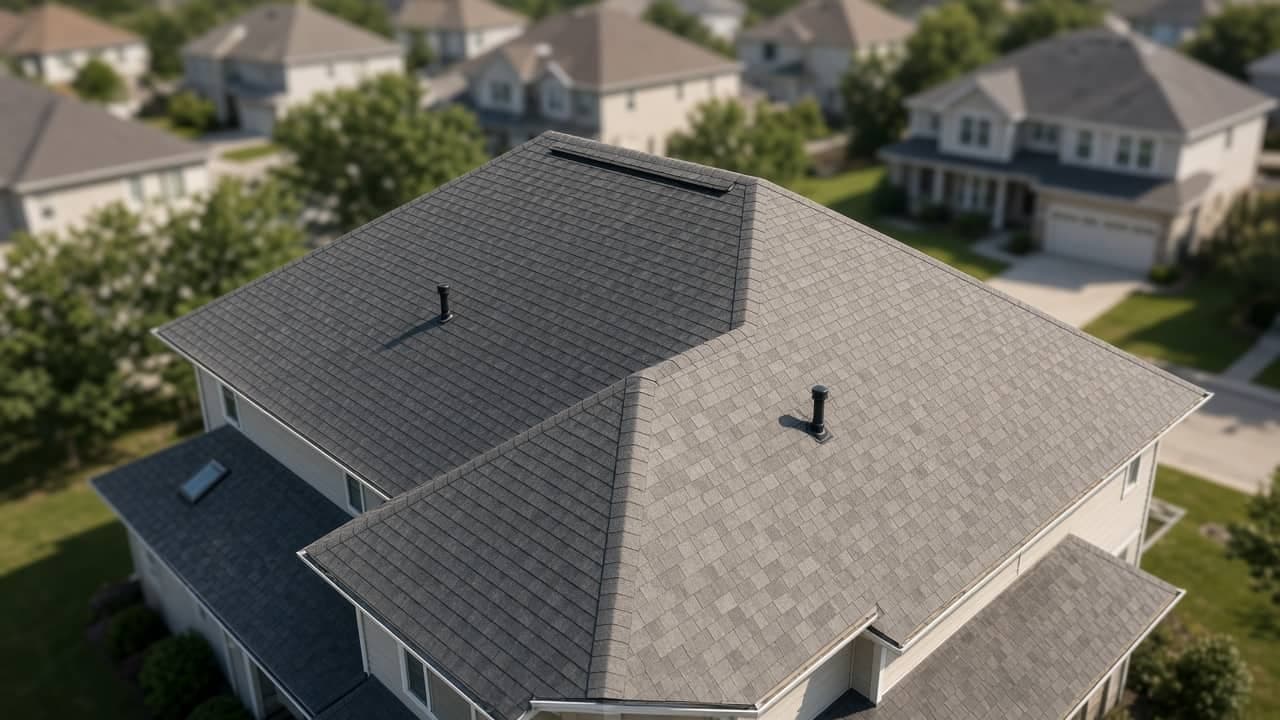
Hip roofs on two-story houses carry more valleys and more plumbing vents than a straight gable. A leak at one boot is a repair when the shingles around it still bend. Bald mats and curling across the south and west slopes of a whole block are not a summer of spot patches. Houses from the same few years often wear out together. Plats such as Algonquin Lakes and Willoughby Farms are examples of that pattern, not a complete list and not a claim about any one address.
ZIP 60102, ZIP 60156, and Lake in the Hills
Put the village and the ZIP on the request. 60102 is the usual Algonquin code. 60156 needs one extra sentence: if the house is in Algonquin, say so; if it is in Lake in the Hills, that village is outside this service area. Guessing from the number is how an estimate gets offered for an address that is not covered, or skipped for one that is. Carpentersville, to the south, is mostly 60110 and is not a substitute label for an Algonquin subdivision.
Storms that bruise one plat and skip the next
A storm over Carpentersville can miss whole Algonquin subdivisions, and a cell can mark one plat and leave the next one clean. Random dark spots and a fresh granule pile in your own gutter matter more than a photo from another neighborhood when you are looking for storm-damaged roof help near Algonquin. Gutters, vent caps, and flue covers are the metal you can read without a ladder. Stay off the roof. A dry ceiling does not mean the shingles are unmarked.
Roof work on an Algonquin permit application
The Village of Algonquin building-permit application lists roof work as its own category, separate from siding, windows, or a general remodel. The house may sit in McHenry County or in Kane County. The permit conversation is still with the village. Ask whether the scope you want — a pipe-boot repair, a valley rebuild, or a tear-off — is what the application should describe, and confirm the current submittal before anyone starts. This page is not a permit determination.
Repair, leaks, replacement, and storm damage
The useful detail is the roof shape: hips, valleys, and pipe boots, or an older hillside house with ice at the eave.
- Roof repair — One split boot or a packed valley on a field that still flexes.
- Roof leak repair — Water at a vent, a valley, or an eave, before anyone calls the whole hip failed.
- Roof replacement — South and west slopes curling together on houses built in the same years.
- Storm damage — A cell that bruises one subdivision and skips the next. Check your own gutters.
- Roof replacement and repair cost — published national and Chicago-region ranges. Not a quote for Algonquin.
Request a free estimate in Algonquin, IL. The Algonquin section on the service area page stays available as the shorter hub note.