What should I do if my roof is leaking right now?
Keep people and electronics away from the wet area, catch the drip with a bucket, and turn off power to a light fixture or fan that is wet. Take photos of the ceiling, the attic if you can reach it safely from the hatch, and the roof from the ground. Do not climb onto a wet or icy roof. A tarp is only a temporary cover and should be set by someone with fall protection. Then request a free estimate, choose roof repair, and say the leak is active.
This site takes free estimate requests by form and replies by email. It is not an emergency dispatch line. Until someone looks at the roof, the goal is to limit what gets wet inside:
- If a ceiling is sagging with water, keep everyone out from under it.
- Move furniture, rugs, and boxes, and lay towels or plastic under the drip.
- From the attic hatch, staying on the joists, note where the water enters: a pipe, the chimney, a valley, or the eave.
- Write down when it leaks. A leak only during wind-driven rain, or only after snow and a thaw, points to different repairs.
Put that detail in your request. Choose roof repair on the form, or read the Carpentersville roof leak repair guide for how a leak gets traced to the opening.
How can I tell a ceiling stain is a roof leak in Carpentersville?
A tan ring, bubbling paint, or a damp patch that appears during rain is a common first sign in Carpentersville houses. Water often travels along the deck before it drips, so the stain may sit away from the actual opening. In the attic, darkened sheathing, matted insulation, or daylight around a pipe or chimney is a stronger clue. Describe the room and the nearest roof detail when you request a free estimate.
Tracing the water — causes, warning signs, the repair visit, and when a leak has outgrown a patch — is on the roof leak repair page for Carpentersville. A ceiling stain is usually not sitting under the hole. On a pitched asphalt roof, water runs along the deck or a rafter and drips where it finds a seam, a nail, or the low point of the insulation. In Carpentersville bedrooms and living rooms the first clue is a tan ring, soft drywall, or paint that bubbles during a long rain and fades after the weather clears. That fade does not mean the opening closed.
The attic tells a clearer story. After a rain, look from the hatch — stay on the joists — for darkened sheathing, clumped insulation, or a bright gap around a plumbing vent or chimney. A damp trail that starts high and ends over an interior wall often leads back to flashing or a valley, not to the shingle directly above the stain.
Residential leak sources that show up again and again in ZIP 60110:
- Pipe boots. The rubber collar on a plumbing vent hardens in the sun and splits. Water follows the pipe into the attic.
- Chimney flashing. Counterflashing pulls out of weathered mortar, or an old bead of roof cement cracks after a few freeze-thaw winters.
- Step flashing at sidewalls, dormers, and lower roofs that meet a two-story wall. Short or face-nailed pieces let rain run behind the metal.
- Valleys packed with granules and tree debris. In a hard storm, water climbs the cut edge of the shingles and wets the deck on both sides.
- Skylight curbs and attic vents whose seals have dried out.
- Nail pops and tabs that never sealed, which open further when wind-driven rain hits the slope.
Overflowing gutters can mimic a roof leak. Ice or leaf buildup along the eave sends water back under the first courses or down the fascia, and the stain shows up at the top of an exterior wall. A repair estimate should separate a drainage problem from an open roof detail so the work matches the cause. Patching only the ceiling leaves the next rain a path indoors.
Missing, cracked, and wind-lifted shingles
Prevailing winds across northern Illinois come from the west and southwest. Houses along the Fox River and on streets open toward the valley, including stretches near Route 31, take those gusts on exposed slopes. After a windy day you may find tabs in the gutter or the yard, or only a dark rectangle where a shingle used to sit.
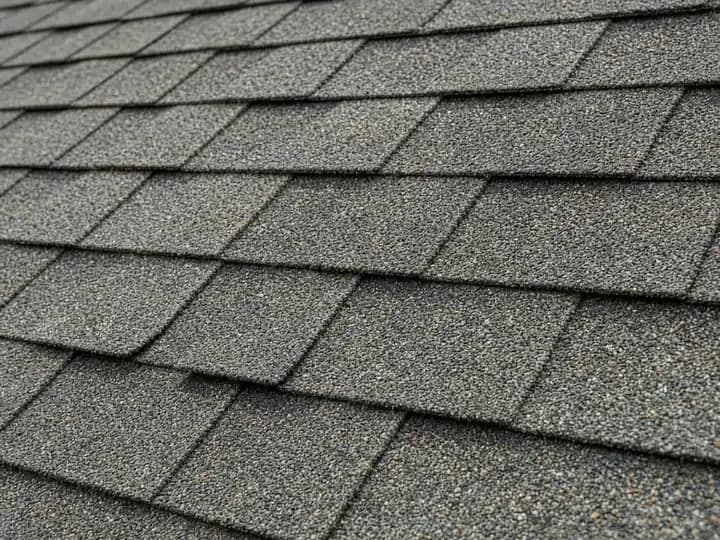
A few missing shingles on a roof that is otherwise flat and flexible are a standard repair. Surrounding shingles are lifted enough to weave replacements in, fasteners go back in the right line, and the seal is set so the patch does not become the next leak. If the underlayment is torn and the wood deck is open, that spot needs cover before the next rain. Note which side of the house is bare when you request a free estimate for your Carpentersville roof.
Cracked or cupped shingles need a different read. One brittle tab can be replaced. A whole slope of curling three-tab shingles, or architectural shingles that have lost the granule surface down to the asphalt mat, is aging out. A spot repair will not stay ahead of the next wind. Light granules in the gutter are normal on a newer roof. Bald patches and grit that fills the downspout after every storm belong in a replacement conversation.
Older homes closer to the river and later subdivisions farther from the banks both show this pattern. Age is only a clue. A shaded north slope can still be serviceable while the south and west slopes on the same house are cooked. The estimate should say which slopes can be repaired and which ones cannot.
Flashing at chimneys, walls, and valleys
A large share of roof repair in Carpentersville is flashing, not a field of shingles. Flashing is the metal that turns water at every place the roof meets something else: a chimney, a sidewall, a skylight, a valley, or a vent. The asphalt can still look decent while the joint beside it is open.
Chimneys on older Kane County houses are a frequent example. Mortar joints weather, counterflashing loosens, and a previous repair may be a surface coat of roof cement. Cement cracks when temperatures swing above and below freezing, which they do through a typical late winter here. A sound repair resets metal into the masonry and replaces torn step or base pieces. Another bead of sealant over an open joint is a short delay, not a fix.
Sidewall and dormer flashing fails the same way. Each shingle course needs its own step piece tucked under the siding. When those pieces are missing, short, or nailed through the face, rain running down the wall gets behind them and shows up as a leak over a window or along a ceiling edge. Open metal valleys need a clear channel. Seed pods and shingle grit turn a valley into a dam in a summer downpour.
Flashing repair is worth doing when the surrounding shingles can still be lifted without breaking. If the field is brittle, working a chimney can crack more tabs than you replace. That judgment — repair the metal, or plan roof replacement when the field will not survive the repair — is what the estimate is for.
What does ice dam damage look like after a northern Illinois winter?
On Fox River roofs, ice dams leave a ridge of ice at the eaves and stains at the outside edge of a ceiling or exterior wall. Wet insulation is often concentrated near the eave. The shingle field higher on the roof can still look sound. Say so on your estimate request if the water shows up only after snow and a thaw.
Carpentersville winters are a cycle, not one long freeze. Snow sits on the roof, a milder afternoon softens it, and the night drops below freezing again. Heat that escapes into the attic melts snow over the living space. Water runs to the colder eaves, refreezes, and builds a dam. Meltwater behind that dam has nowhere to go except under the shingles and into the soffit, the top of the wall, or the ceiling near the outside of the room.
Signs that ice, rather than a plumbing leak, is involved:
- A ridge of ice along the eaves, often with icicles, after snow followed by a thaw
- Stains or peeling paint at the top of exterior walls
- Wet insulation packed at the eaves while the ridge area of the attic looks drier
- The same room wetting every late winter, then drying out by May
Chipping ice off shingles with a tool tears the mat and the underlayment. Leave the ice in place and deal with water that is already inside. A repair after dam season often means replacing damaged shingles and underlayment at the eave and checking whether an ice-and-water membrane is present and still sealed. Many roofs in this climate have that membrane along the eaves; water that got past it needs more than a surface patch.
Attic heat is part of why dams form. Blocked soffit vents, a bath fan dumping moist air into the attic, and missing insulation at the eaves all feed the melt. A roofing estimate covers the roof damage and should say when the leak will return until the heat loss is addressed. A shingle patch alone does not end an ice dam. If water is coming in now, request a free estimate and name the wet rooms. Active leaks take priority over cosmetic ice.
When is roof repair enough on a 60110 home?
Repair fits a local problem on a roof that still sheds water: a split pipe boot, open chimney flashing, a valley that overflows, or a handful of missing shingles on an otherwise even slope. Replacement is the clearer scope when leaks show up in several places, shingles are curling or bald across a slope, or the same spot has already been patched more than once.
Repair is the usual scope
- One leak with a clear source, such as a split boot or a section of chimney flashing
- A small area of missing or wind-creased shingles on a slope that still lies flat
- A valley, vent, or skylight detail that failed while the field still has granules
- Ice-dam damage limited to the eave, with the upper roof in sound shape
Replacement is the clearer scope
- Leaks in more than one area, or a leak that returned after earlier patches
- Widespread curling, cracking, or bald mats across a slope
- Soft or stained decking over a large part of the roof
- An older roof that already has an overlay, or several repairs stacked on the same slopes
Many asphalt roofs in northern Illinois deserve a close look somewhere in the 15- to 25-year range. Sun, ventilation, and the product all move that window. Two houses on the same street in 60110 can need different scopes. Widespread hail bruises are a separate case, covered under storm damage roof repair after hail or high wind.
If you already know the roof is finished, start with a Carpentersville roof replacement estimate. Published national and Chicago-region cost ranges — not a price for this house — are on the Carpentersville roof cost guide. If you are unsure, a repair request is a sound starting point. The finding can still be that replacement is the more honest scope. You should hear which one applies to your house, and why, before a tear-off is on the table.
How much does roof repair cost in Carpentersville?
There is no published Carpentersville price. Angi, updated August 3, 2026, says most homeowners spend an average of $1,174 on a roof repair, with a common range of $395 to $1,968. Fixr, updated January 30, 2026, puts typical shingle repairs at $400 to $2,000. Flashing, decking, and access change the number, and Angi publishes a rule of thumb that a repair costing 50% or more of a replacement is a reason to replace the roof. A free estimate gives the figure for your house.
The Carpentersville roof repair and replacement cost guide lists those sources side by side, with leak, flashing, and hail repair rows and the dates each figure was published. A national range cannot see your chimney, your pitch, or how many layers are on the roof. A written estimate should:
- Name the detail being repaired and why it failed
- Say whether decking or underlayment is part of the price
- Say plainly when the repair is close to the cost of a new roof
If a repair keeps adding up, compare it with a full roof replacement estimate in Carpentersville. To get a figure for your house, request a free roof repair estimate.
How do Fox River winters show up on a Carpentersville roof?
Fox River winters stress eaves, gutters, and sealant-only flashing through repeated freeze-thaw. Ice dams show up after heavy snow and a thaw, especially on houses with warm attics. A stain, a missing tab, or a gutter full of granules is worth a repair estimate before the next season stacks another problem on the same detail.
Carpentersville sits in Kane County on the Fox River. The repair problems above track that weather more than they track a brochure lifespan.
- Winter and early spring bring snow and repeated freeze-thaw. Eaves, gutters, and sealant-only flashing take the stress. Ice dams show up after a heavy snow followed by a thaw, especially on houses with warm attics.
- Spring and summer thunderstorms bring hard rain, hail, and straight-line wind. A short cell can lift tabs that barely sealed and drive rain under a ridge. Hail can bruise shingles without an immediate indoor leak.
- Houses on higher ground and on lots open to the river see stronger gusts than a roof tucked into a tight block. Exposed slopes lose shingles first.
- Summer sun bakes south- and west-facing slopes. Shingles dry out, granules shed, and rubber boots crack. A leak in October often starts with July wear plus one wind-driven rain.
That pattern does not mean every house in 60110 needs work this year. It means a stain, a missing tab, or a gutter full of granules is worth a look before the next season stacks another problem on the same detail. This page is about roof repair in Carpentersville. Homeowners in East Dundee, West Dundee, Algonquin, Sleepy Hollow can confirm those Fox River towns on the service area page. If your ZIP is nearby and not listed, send the form and ask whether the address is covered.
Roof repair estimates in nearby Fox River towns
Carpentersville is the repair guide above. East Dundee, West Dundee, Algonquin, and Sleepy Hollow take the same free repair estimates, with different roofs. Open a town for the local section, or request an estimate and name the village.
East Dundee, IL
ZIP 60118 · Kane County, with a small section in Cook County
Chimney counterflashing and step flashing on older east-bank houses, plus ice-dam stains along exterior walls. A cement-only joint often opens again after the next freeze-thaw.
West Dundee, IL
ZIP 60118 · Kane County
Repeat leaks on patched roofs near the river, and wind-lifted tabs on west and southwest slopes along the Route 31 side of the village.
Algonquin, IL
ZIP 60102 · McHenry and Kane counties
Split pipe boots and valleys packed with debris on complicated subdivision roofs. One opening can still be a repair when the field is flexible.
Sleepy Hollow, IL
ZIP 60118 · Kane County
Clogged valleys and gutters under mature trees, and limb strikes that open a small area of shingles. Separate a clog from a failed field before treating it as a patch.
Request a free roof repair estimate
The estimate is free, and there is no obligation to go further. Share what you see: which room, which side of the house, and whether water is active. A useful request also notes the age of the roof if you know it, and whether the problem started after wind, after ice, or during an ordinary rain. Photos from the ground are enough. Stay off a wet or steep roof.
The visit looks at the area you reported and the details that usually cause that symptom — shingles, flashing, vents, and valleys — then lays out a scope: repair one detail, repair a few details, or replace. Scheduling depends on weather and what the roof needs. Ask about timing when you send the request.